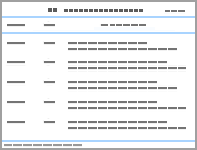
| 2021 | |||||||
|---|---|---|---|---|---|---|---|
| Forest | Grassland | Water | Farmland | Construction area | Bareland | ||
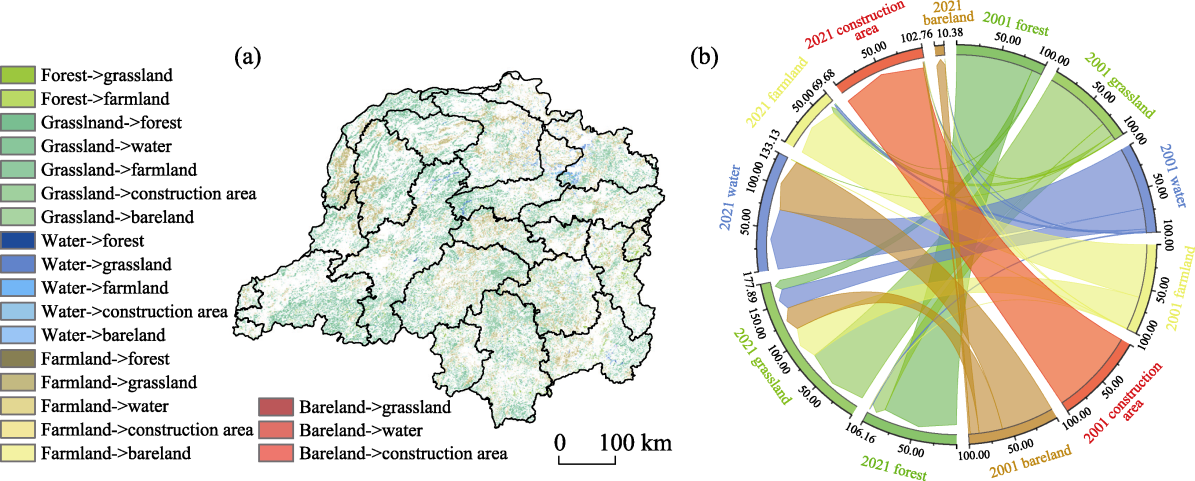
| 2001 | Forest | 88.71 | 11.28 | 0 | 0.01 | 0 | 0 |
| Grassland | 16.09 | 77.54 | 0.18 | 5.90 | 0.30 | 0 | |
| Water | 1.20 | 23.62 | 71.92 | 2.82 | 0.34 | 0.09 | |
| Farmland | 0.17 | 38.35 | 0.29 | 60.95 | 0.25 | 0 | |
| Construction area | 0 | 0 | 0 | 0 | 100 | 0 | |
| Bareland | 0 | 27.10 | 60.75 | 0 | 1.87 | 10.28 | |
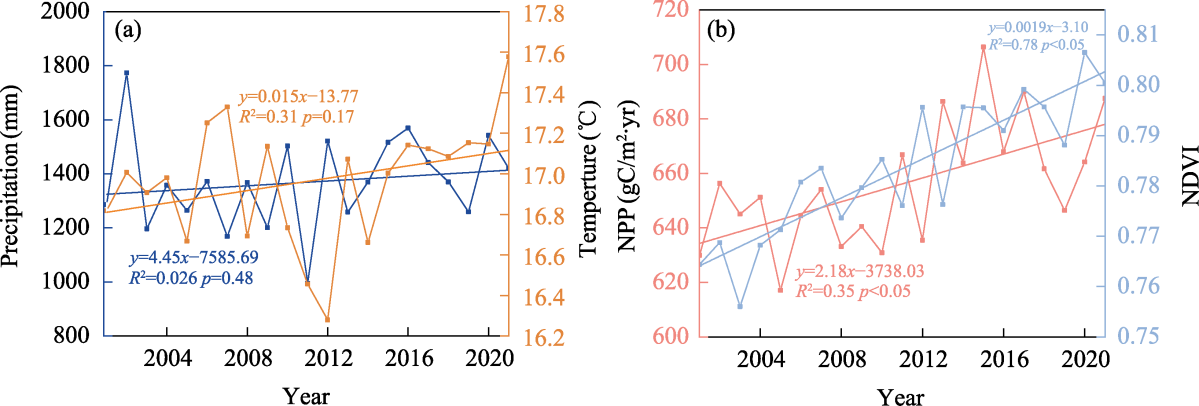
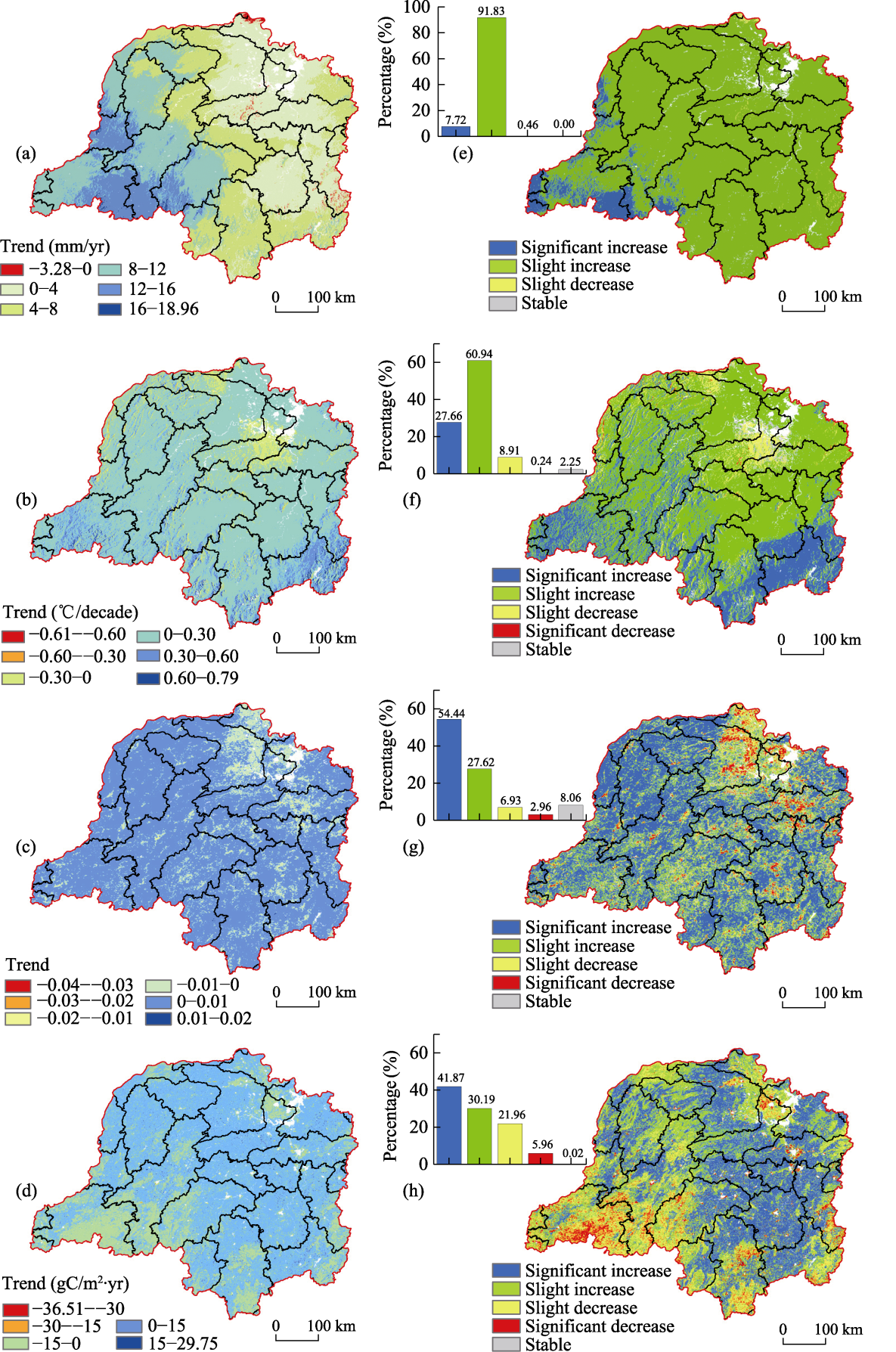
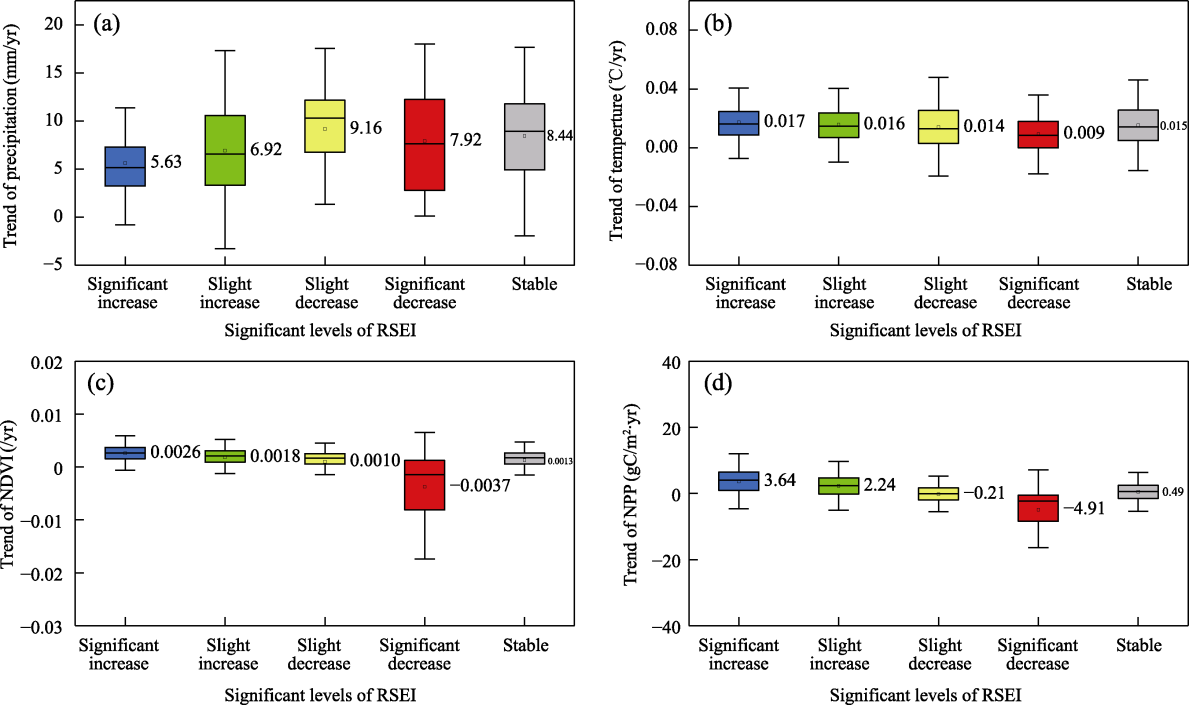
Figure 6 Changes in the trend values of climate (a: precipitation; b: temperature) and vegetation (c: Normalized Difference Vegetation Index; d: net primary productivity), corresponding to those of different significant levels in Remote Sensing Ecological Index (NDVI and NPP are the same meaning in
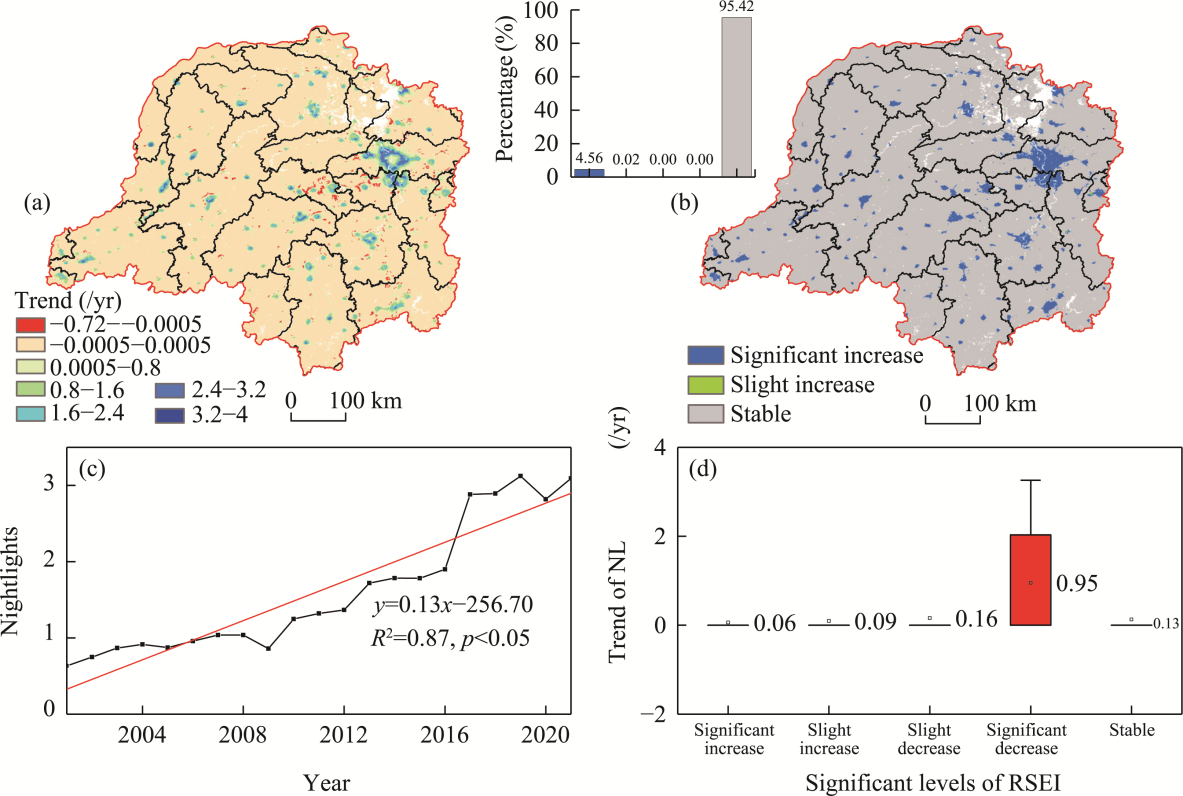
Figure 8 Spatial patterns of the (a) nighttime light trend slopes, (b) corresponding significance levels, (c) interannual variations in basin-mean nighttime light, and (d) nighttime light trend statistics across RSEI change classes (NL: nighttime light). Notably, the dominant class in panel (a) (−0.0005 to 0.0005) represents near-zero trends rather than negative changes; statistical significance is reported in panel (b).