| Type | Criteria | Description |
|---|---|---|
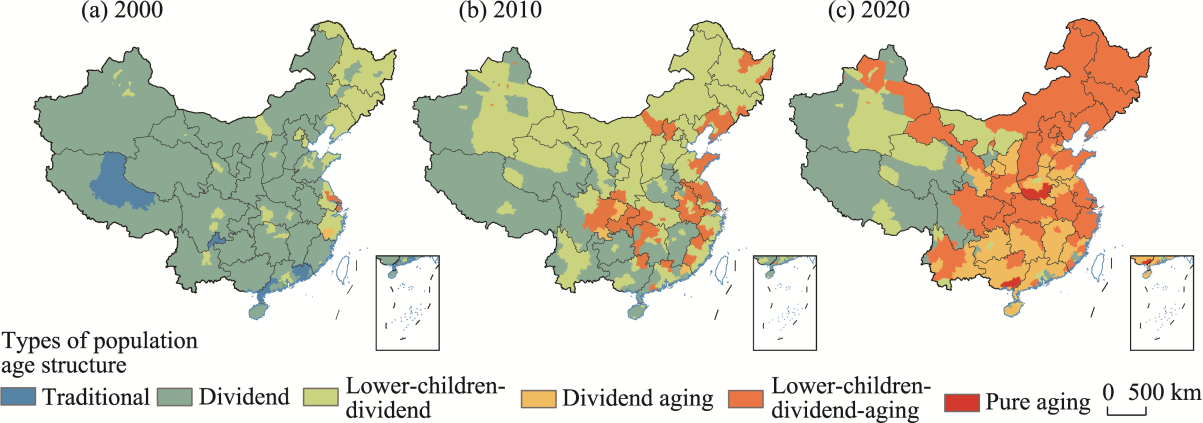
| Traditional (1) | C≥30%, L<60%, A<10% | A high proportion of children (≥30% ), no demographic dividend, and no aging. |
| Dividend (2) | C≥20%, L≥60%, A<10% | The labor proportion exceeds 60%, with no aging and no lower children. |
| Lower-children-dividend (3) | C<20%, L≥60%, A<10% | The child proportion is below 20%, the labor proportion exceeds 60%, and it has not yet aged. |
| Dividend aging (4) | C≥20%, L≥60%, A>10% | The labor proportion exceeds 60%, the elderly proportion exceeds 10%, and it has not yet experienced lower children. |
| Lower-children-dividend-aging (5) | C<20%, L≥60%, A≥10% | The child proportion is below 20%, the labor proportion exceeds 60%, and the elderly proportion exceeds 10%. |
| Lower-children-aging (6) | C<20%, L<60%, A≥20% | The child proportion is below 20%, the elderly proportion exceeds 20%, and the dividend window has closed. |
| Pure aging (7) | C≥20%, L<60%, A≥10% | In theory, there exists a pure aging population. |