| Indicators | Driving factors | Notes | Explanation |
|---|---|---|---|
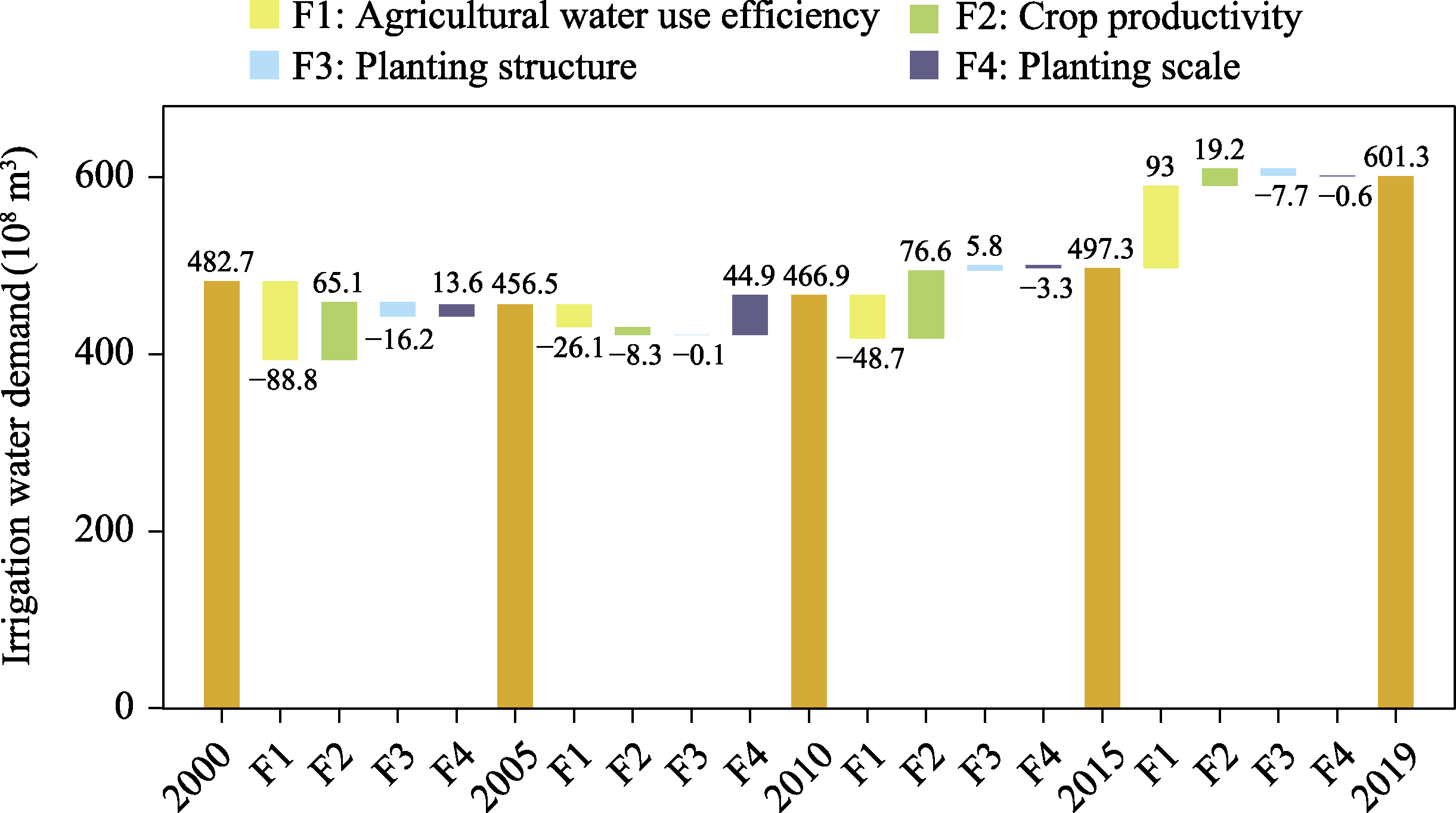
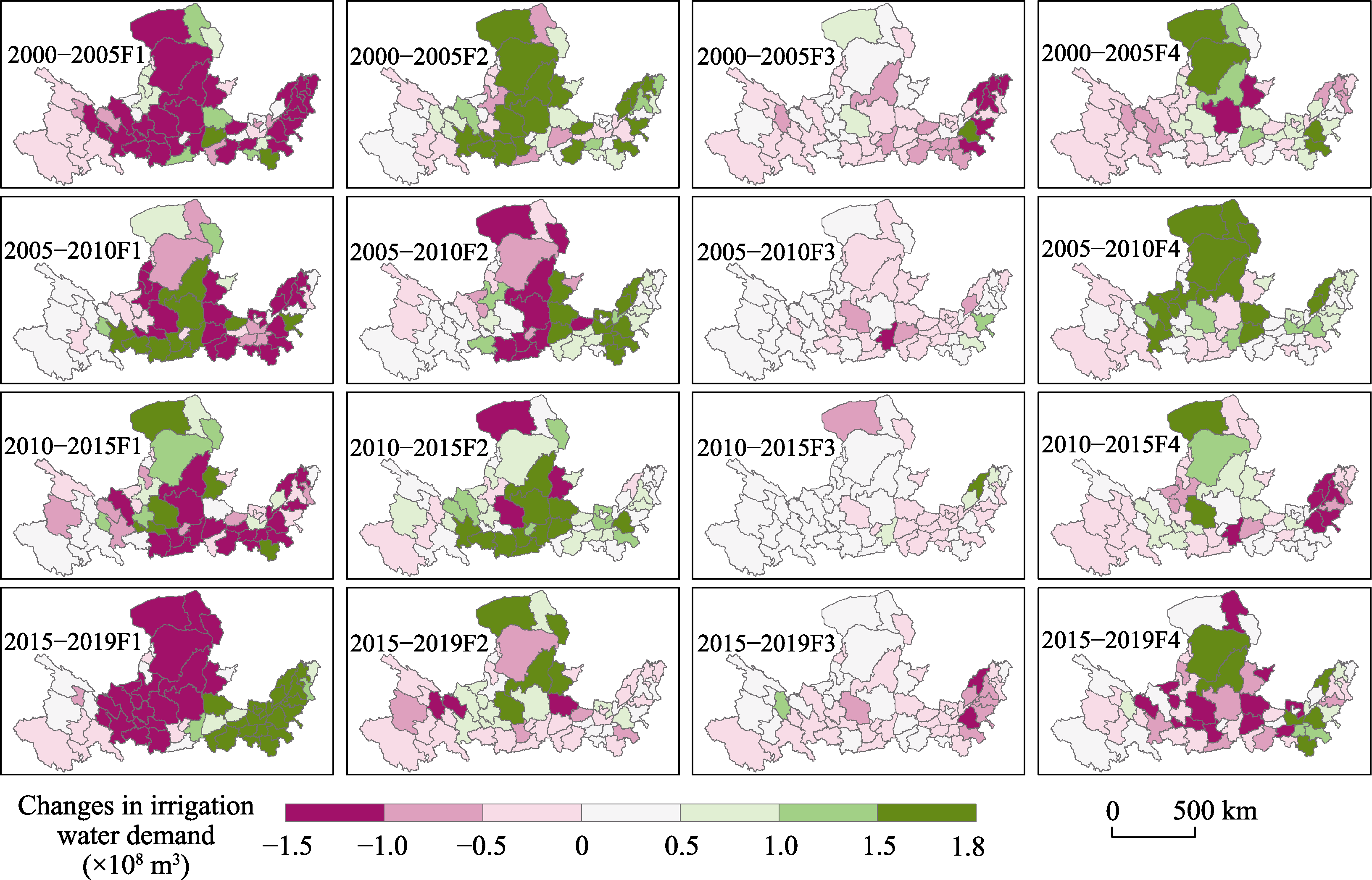
| $W{{F}_{i}}$ | Wi/Pi | Water demand per unit of food production | Water footprint of crop i production that represents agricultural water use efficiency. |
| ${{Y}_{i}}$ | Pi/Ai | Yield per unit area | Productivity which is closely related to the production inputs, technology level and regional economic development level |
| Si | ${{A}_{i}}/{{A}_{t}}$ | The proportion of the acreage of crop i to the total area | Planting structure |
| ${{A}_{t}}$ | ${{A}_{t}}$ | Total acreage of all crops | Planting scale |
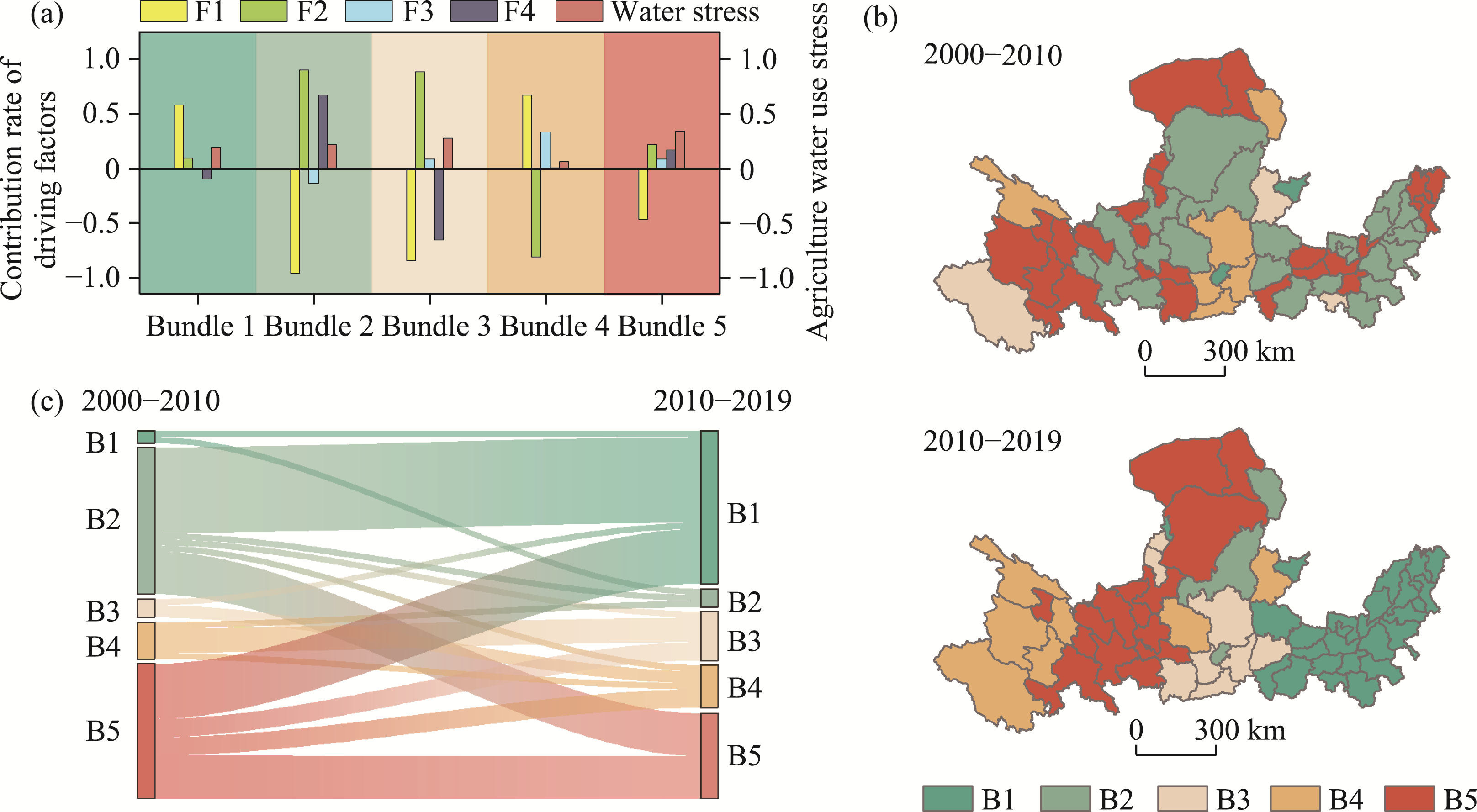
Figure 6 Spatiotemporal variation characteristics of irrigation water demand driving zones in the Yellow River Basin: (a) Irrigation water demand driving characteristics of each zone; (b) spatial distribution of each zone during the periods 2000-2010 and 2010-2019; (c) change trajectories of city zones within the two periods
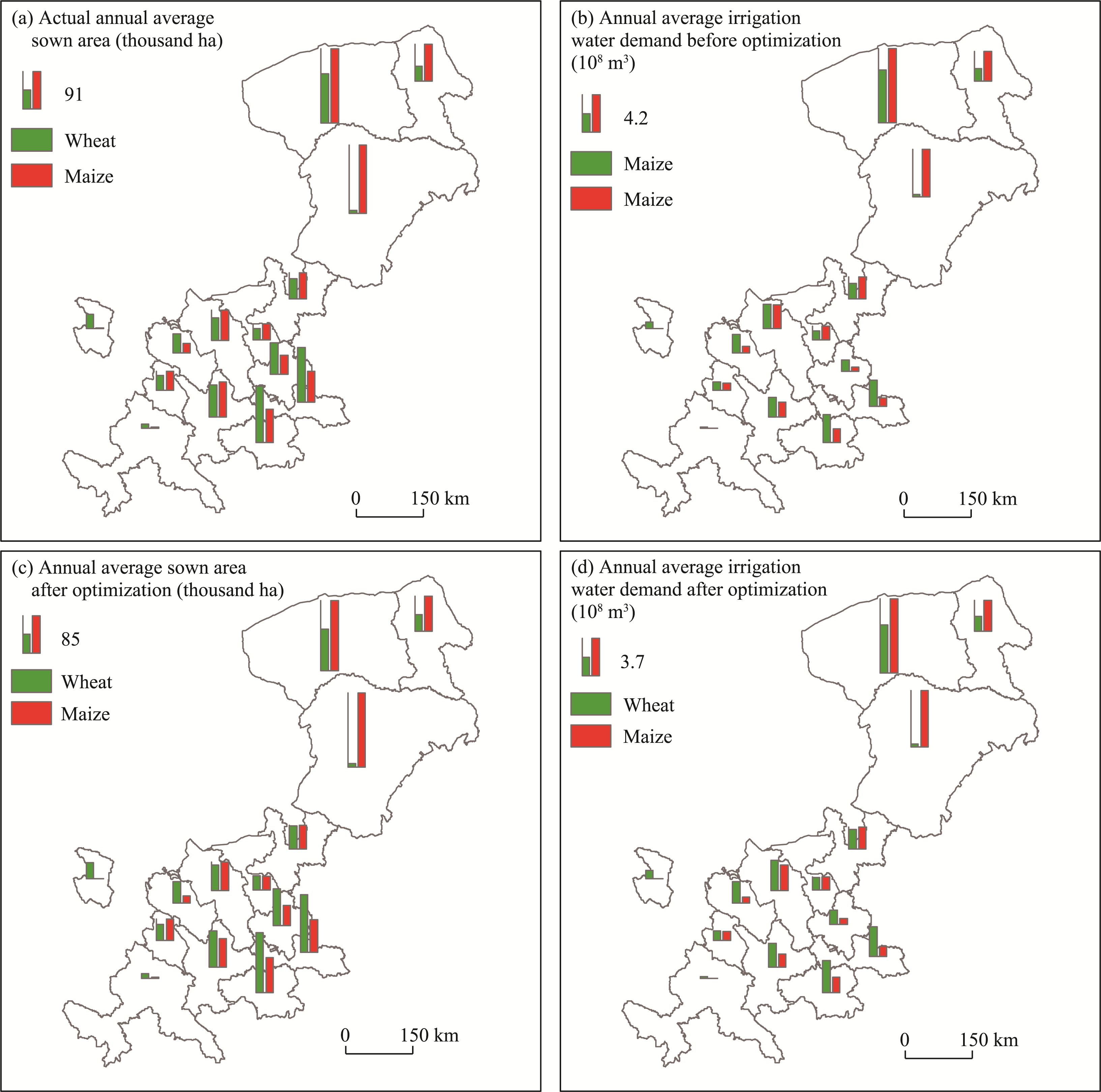
Figure 7 Annual average sown area (a), annual average irrigation water demand for wheat and maize (b), annual average sown area after optimization (c), annual average irrigation water demand for wheat and maize after optimization (d) in key agricultural water-saving zone (prefecture-level cities of the upper Yellow River Basin transition from B2 to B5 and persistent B5 classification)